Industry Guide
The trade photography shot list: what a capable business needs to show
Finished-work photographs show the result. A useful trade image library also shows the people, process, equipment and standards that made it possible.
Most trade businesses have photographs of completed work. Fewer can show who did it, how the work was organised, what equipment was available and where judgement was applied before the finished surface hid the difficult part.
That gap matters because a prospective client is rarely judging the final object alone. They are trying to understand whether the business has done relevant work before, who will arrive, what scale it can handle and whether its way of working suits the job.
A useful trade photography shot list is therefore not a list of sparks, tools and people in high-vis. It is a plan for making real capability easier to understand.
A finished job is not the whole story
Completed-project photographs matter. They show the outcome, establish the type and scale of work and give a business something concrete to discuss. But a gallery of immaculate finished surfaces can leave the most important questions unanswered:
- Was this the company’s work or simply a project it attended?
- Which part of the job did it deliver?
- Who carried out the work?
- What had to be diagnosed, fabricated, coordinated or checked?
- Is the example relevant to my site, sector or scale?
- What will it be like to have this team on the job?
The photographs do not need to answer every question on their own. They need to support an accurate explanation.
Think in evidence layers: people, environment, process, skill, capacity, standards and outcome. Together they produce a more credible account of the work than any single hero image can.
Start with the decision, not the equipment
Before writing the shot list, name the person who needs the images and the decision they are making.
A homeowner choosing a builder, a facilities manager shortlisting a maintenance contractor and a procurement team reading a tender are not looking for exactly the same evidence. Neither are an experienced tradesperson considering a job and a local customer checking a Google profile before calling.
Start with three questions:
- Who needs to understand the business? Name the customer, buyer, employee or stakeholder rather than “the audience”.
- What are they uncertain about? It may be relevant experience, scale, responsiveness, workmanship, site behaviour or whether the business actually does the specialised work it claims.
- Where will they see the answer? List the specific website page, capability statement, tender section, recruitment ad, Google profile or project story.
This is the same discipline used in a good commercial photography brief. The brief defines the communication job. The shot list turns it into observable people, places, actions and results.
It also prevents a common mistake: spending half the shoot photographing the largest machine because it looks impressive, then discovering there is no clear portrait of the project lead and no image that explains the service customers actually buy.
The complete trade photography shot list
Not every trade or industrial business needs every frame below. A two-person electrical firm, a civil contractor and an engineering workshop will have different evidence to show. Use the sections as prompts, then give priority to what is true and commercially relevant.
1. Identity and arrival
Show the business as somebody encounters it in the real world.
- premises, workshop, yard or site in its wider setting;
- a recognisable entrance, reception or trade counter where customers visit;
- vehicles and mobile units in genuine use;
- signage, livery and workwear where they help identify the business;
- the area served, when the landscape or type of site is relevant;
- a wide establishing frame that gives the rest of the story a location.
This is not an instruction to fill every photograph with logos. Identity can come from the particular workshop, fleet, materials, team or environment. A photograph should still make sense after a tight mobile crop removes the sign.
For a Canterbury business, place may mean an urban workshop, an occupied commercial site, a rural property or an operation exposed to weather and distance. Show the conditions that shape the work rather than reaching for a generic Christchurch landmark.
2. People and roles
Customers often meet a company name before they meet a person. Useful people photography reduces that distance without turning everybody into a row of corporate headshots.
Plan for:
- the owner or senior contact in a relevant environment;
- project managers, supervisors and technical leads;
- tradespeople carrying out work familiar to them;
- apprentices and experienced staff working together where that relationship is real;
- office, scheduling, estimating or customer-facing roles that keep the operation moving;
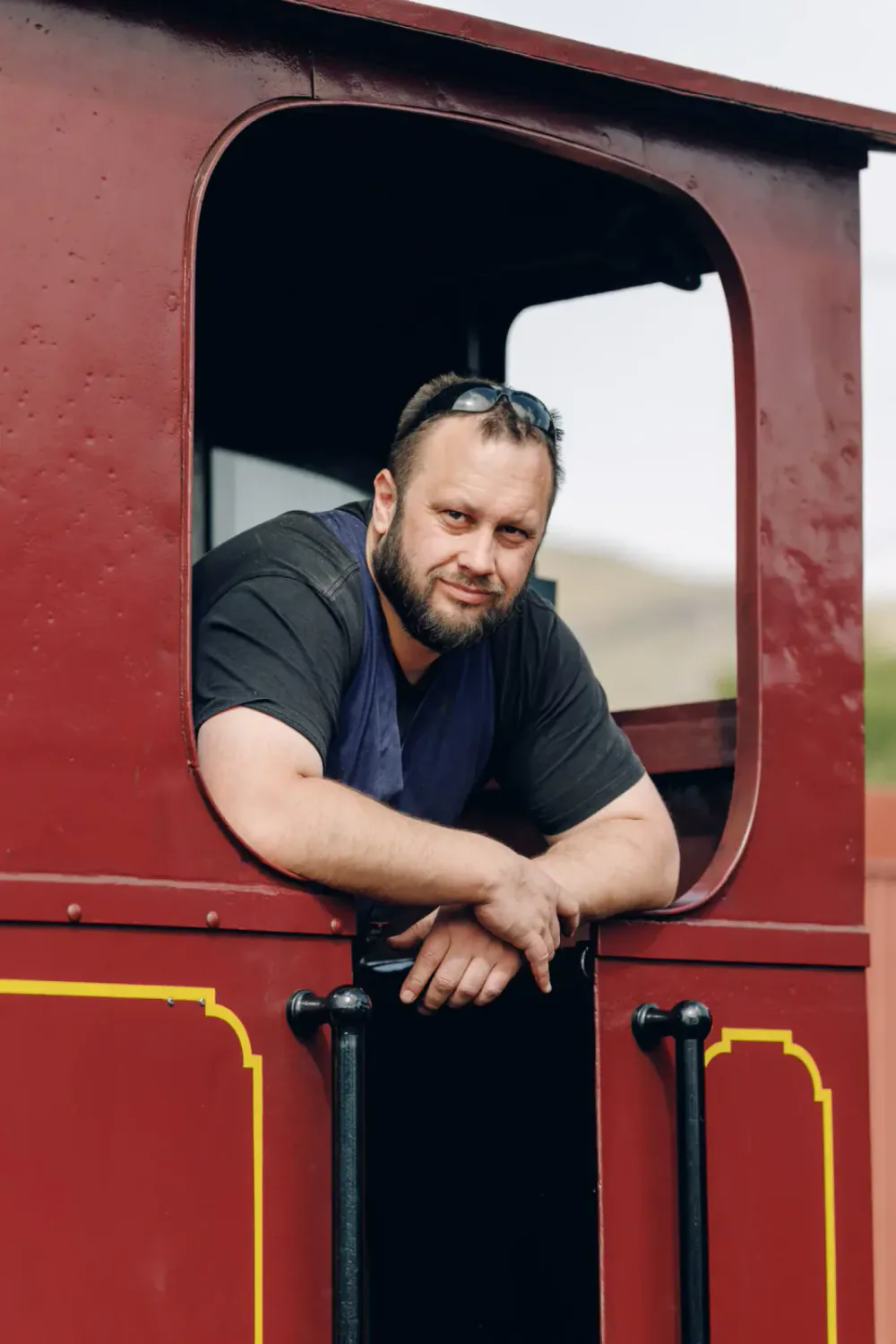
- a small number of direct portraits for profiles, proposals and media requests;
- wider team photographs only if the group is current and there is a clear use for them.
Names and roles should be recorded while the assignment is fresh. “Person using tool” is a weak archive caption six months later. “Fabricator checking the fit before final welding” gives a writer, designer or bid manager something useful to work with.
Avoid asking people to fold their arms beside a vehicle simply because trade businesses are expected to have that picture. A quiet portrait made in the place they know can be more informative than a manufactured display of confidence.
3. Process and judgement
The most persuasive part of a project may disappear before handover. Diagnosis, preparation, sequencing and coordination are often where experience becomes visible.
Look for:
- inspecting the problem before work begins;
- reading the site, drawings or measurements in their proper context;
- setting out, preparing and protecting surrounding areas;
- choosing or preparing materials;
- coordinating between people, trades or stages;
- operating equipment where the operator’s judgement is readable;
- solving a real constraint as it occurs;
- explaining work to a client, colleague or apprentice when that conversation is genuine;
- checking progress before the next stage covers it.
Good documentary coverage follows a sequence: context, action, detail, interaction and result. It does not require somebody to perform a fake meeting around a plan or repeat an awkward task until it looks busy enough.
4. Skill, material and useful detail
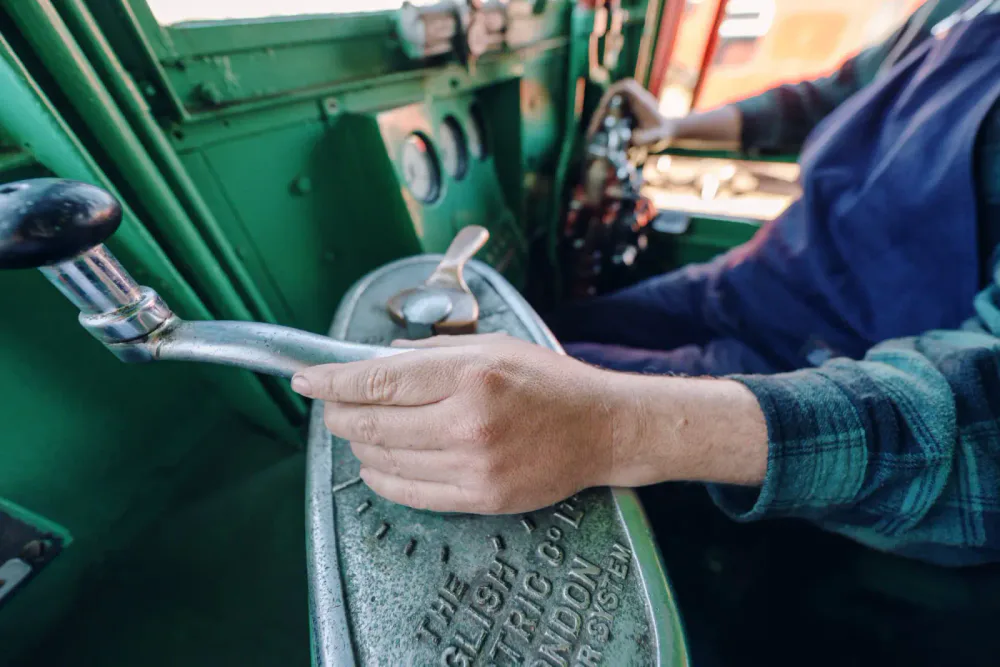
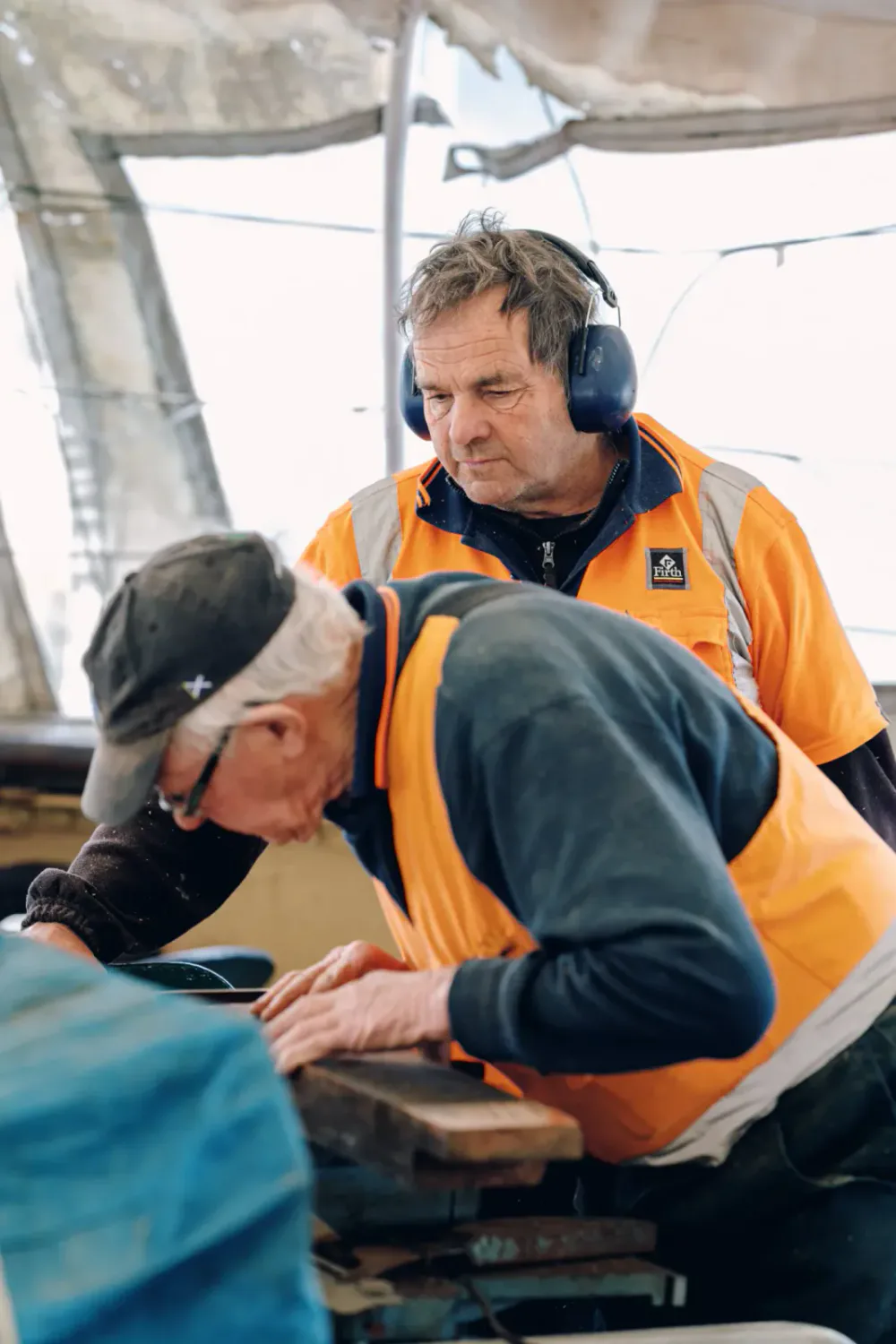
Hands and tools are valuable when the photograph explains what the person is doing. A close frame of an unidentifiable hand holding an unidentifiable object is mostly atmosphere.
Useful details include:
- a measurement, alignment, fit, join or finish being checked;
- the relationship between a tool and the material it changes;
- specialist attachments, instruments or fabricated components;
- surface preparation and protection;
- wear, texture and scale that help a viewer understand the environment;
- controls, settings or readings when they are safe and not confidential;
- the small decision that separates one stage from the next.
Make at least one wider version of each important detail. The close photograph shows precision; the wider one establishes who is responsible and where it fits in the job.
5. Capacity and scale
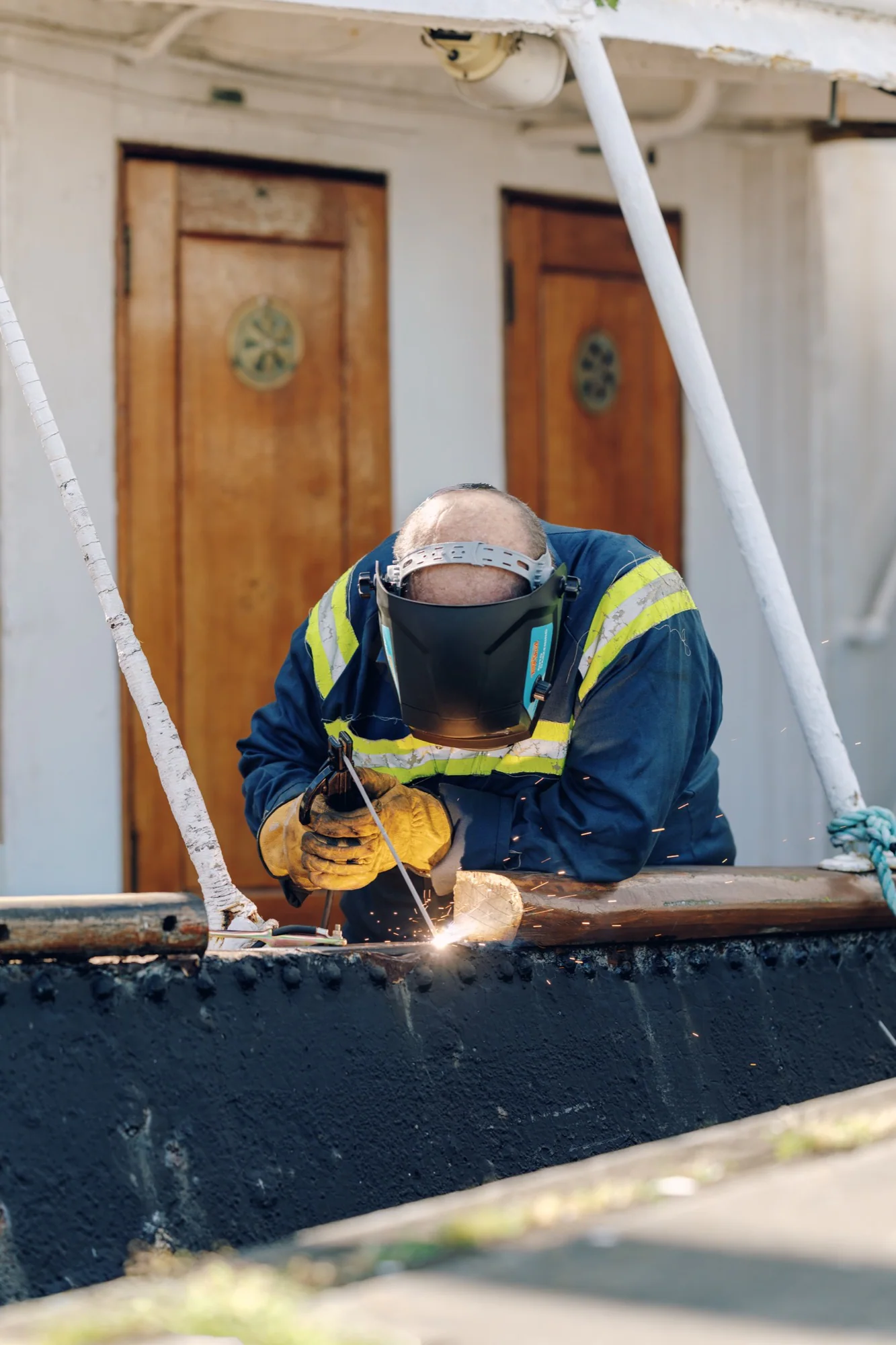
Equipment is not automatically proof of capability. It becomes useful when it shows what the business is equipped to do.
Photograph:
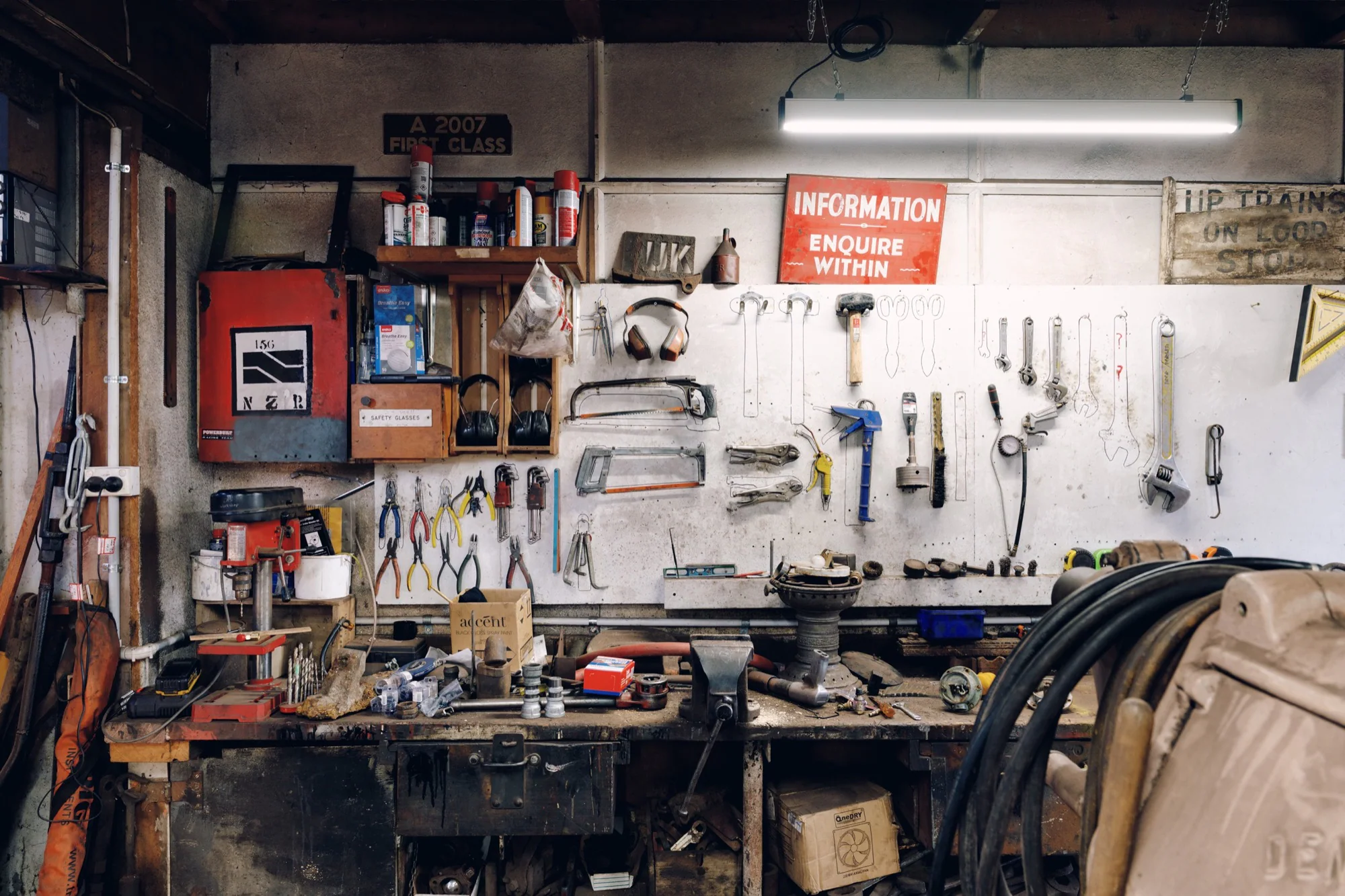
- the workshop, yard or production space as an operating system rather than an empty room;
- plant, vehicles and specialist tools relevant to priority services;
- people with machinery so the scale and use are clear;
- several stages of work happening at once if that honestly represents capacity;
- storage, mobilisation or site setup where logistics are part of the service;
- larger site relationships that cannot be understood from ground-level details alone.
Do not build the library around every asset the business owns. A procurement manager needs to understand relevant capacity, not browse a visual equipment register. Connect each machine or space to a service, project type or operating advantage the accompanying copy can explain.
6. Standards, safety and checks
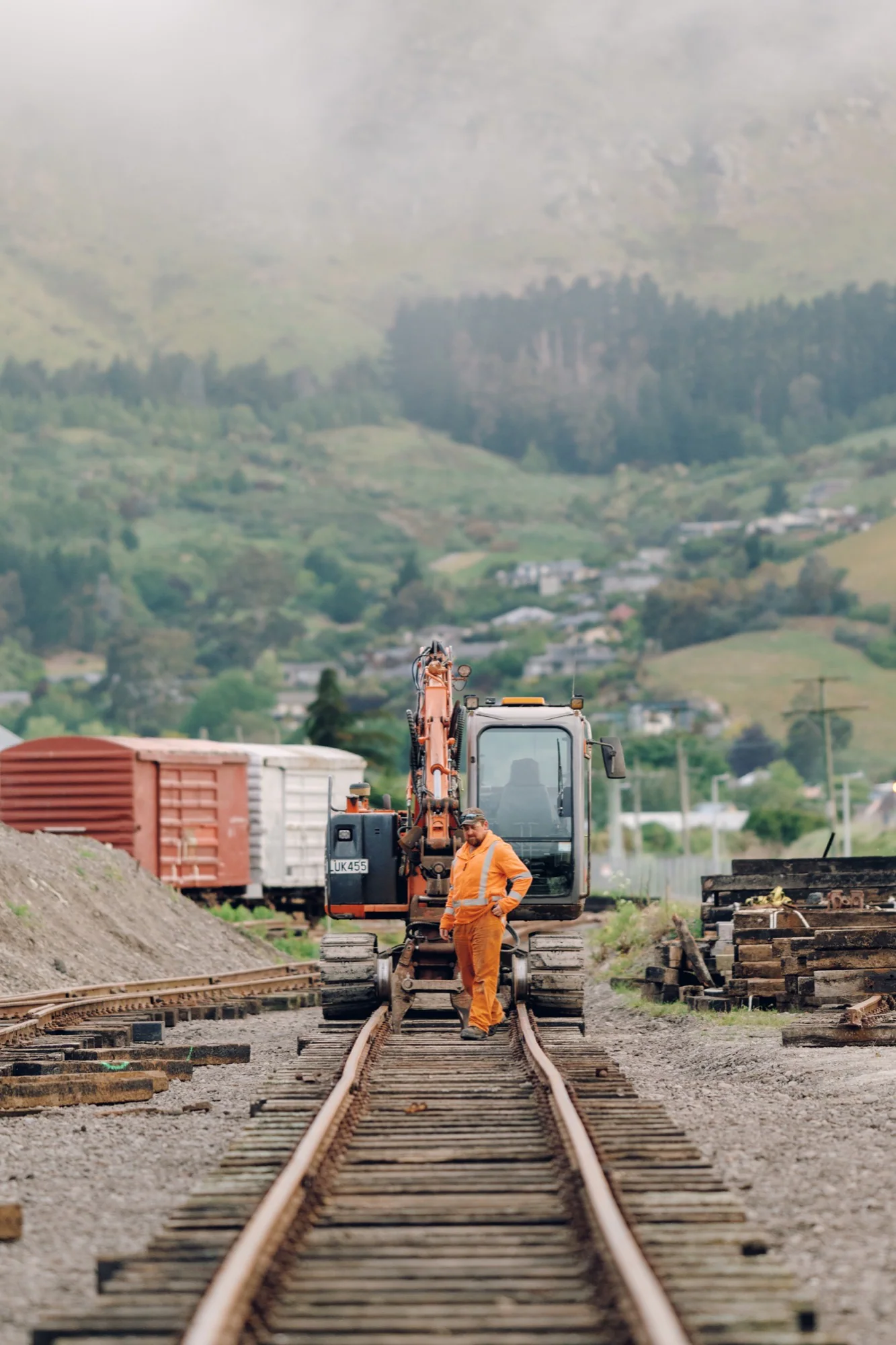
Quality and safety should appear as parts of real work, not props brought out for a marketing photograph.
Depending on the business, useful moments may include:
- a pre-start discussion that was already required;
- correct PPE and controls for the activity being photographed;
- isolation, exclusion or protection measures visible in context;
- an inspection, measurement or test being performed by the right person;
- documentation used as part of a genuine handover or quality process;
- clean preparation, storage or separation that matters to the work;
- a supervisor reviewing work before the next stage begins.
A photograph can show that a procedure took place on one occasion. It cannot establish a company-wide safety record, certify compliance or prove the quality of work hidden outside the frame. The caption and surrounding copy should remain equally precise.
7. Finished work in context
Do not abandon the completed project. Photograph it with enough context to show what was achieved.
Include:
- an establishing view of the complete result;
- the result from the position in which a client, user or inspector encounters it;
- medium views that explain relationships between parts;
- close details of the workmanship most relevant to the brief;
- people using, operating or moving through the finished work where appropriate;
- matching before-and-after positions when the change is genuinely informative;
- the surrounding constraints that made the project demanding;
- a clean record before the site changes, becomes occupied or is handed over.
“After” photographs are strongest when the viewer knows what changed and why it mattered. Record the project facts with the images: location at a useful level of specificity, scope, date, team, client approval and any claim that needs checking before publication.
8. Publishing variations
A complete scene still needs to fit where it will be used.
For priority subjects, make deliberate variations:
- horizontal frames for page headers, proposals and editorial use;
- vertical frames for recruitment, profiles and narrow placements;
- tighter crops for cards and small screens;
- wider compositions with quiet space for headings;
- a version with no recognisable client, registration or third-party branding where possible;
- a short sequence rather than one isolated image for project stories.
These are not duplicates. They are working files for different layouts. The guide to website photography for Christchurch and Canterbury businesses explains how to tie those variations to the question on each page.
One image library, several jobs
The strongest commercial library is organised around use, not a download folder called “miscellaneous”. The same assignment can supply several channels if those destinations are known before the day.
Website
The homepage needs a clear introduction, not the entire company history. Service pages need relevant people, processes and outcomes. About and team pages need recognisable humans. Project pages need a sequence with enough context to support the written explanation.
Assign a small set of photographs to each priority page before expanding the general library. That makes gaps visible while the people and site are still available.
Capability statements and tenders
A capability document may need relevant project examples, key personnel, specialist equipment, geographic reach and a readable method. New Zealand Government Procurement advises suppliers to connect examples directly to the buyer’s requirements and notes that images can help present a tender response clearly.
That does not make a beautiful photograph evidence of compliance or a substitute for the evaluation criteria. Use photographs to identify a real example, make scale understandable and help the reader navigate the written proof.
Recruitment
Prospective staff need more than a group photograph on a Christmas-function day. Show the places, conditions, tools and working relationships they would actually join.
Include different roles and levels of experience. Show what is demanding as well as what is appealing. Accurate expectations are more respectful—and more durable—than a generic promise about culture.
Google Business Profile
Google recommends photographs of representative services being performed, specialist services and team members so customers can understand what a business does. It also says images should represent reality and should not be significantly altered or excessively filtered. Its current Business Profile photo guidance is a useful publishing check, not a formula for local ranking.
Choose clear, current images that make sense at thumbnail size. For a customer-facing trade, that may include the premises, the team, a recognisable vehicle, work in progress and several completed examples. For a business without a public shopfront, do not manufacture one for the sake of a category.
Project stories, awards and press
Editors and bid writers need context around the hero frame. Keep establishing views, named people, working sequences, details and finished outcomes together. Record accurate captions and identify any embargo, client approval or credit requirement.
A coherent sequence can become a case study, an award entry or a press response without asking the team to reconstruct the project after it has gone.
Photograph safety honestly
A photographer on a worksite is another person whose presence has to fit the work. The production plan should identify the site contact, access, induction, supervision, PPE, restricted areas, moving plant and any activity that cannot be interrupted or repeated.
WorkSafe’s general workplace guidance makes clear that workers and other people need appropriate information, instruction or supervision and that the controls depend on the actual risks. A residential renovation, fabrication shop, rail corridor and active civil site will not share one universal photography setup.
The camera does not create an exception. Do not ask somebody to remove PPE for a cleaner portrait, step inside an exclusion area, repeat an unsafe action, operate unfamiliar equipment or perform a procedure that is not really part of the job. If a viewpoint is not safe or authorised, it is not a missing shot. Find another way to explain the work.
Safety theatre is misleading in the other direction too. Do not stage a toolbox talk, inspection or checklist simply so the business appears diligent. Photograph controls and conversations when they genuinely happen; use other frames to show the wider work accurately.
People need to know where their image is going
“We are taking a few photos today” is not enough information if those photographs may later appear on a public website, tender, recruitment campaign, paid advertisement or large sign.
The Office of the Privacy Commissioner advises businesses to seek consent when somebody is photographed in their workplace or portrayed as a customer for advertising. A 2025 Privacy Commissioner case note also shows why agreement to make or share an image for one purpose should not be assumed to cover later marketing use.
Before the shoot:
- tell employees and subcontractors what is being made and the likely uses;
- decide how permission will be recorded and who holds that record;
- identify anyone who should not be recognisable;
- agree how clients, residents and members of the public will be handled;
- check uniforms, access cards, vehicle registrations, plans, screens and labels for sensitive information;
- confirm whether third-party brands, designs or proprietary processes can appear.
The appropriate record depends on the project and intended use. The practical principle is simple: people should not discover the advertising use of their image by seeing the advertisement.
What photographs cannot prove
Photographs make evidence legible. They are not the evidence in every sense.
New Zealand Government Procurement describes supplier due diligence as independent checking of matters such as capacity, capability, expertise, past performance, systems and processes. Its examples include references, case studies, site visits, accreditations, audits, staff CVs, insurance and compliance certificates.
Likewise, MBIE’s guidance on choosing a building practitioner points customers towards relevant experience, references, required licences and written agreements.
A good project library can help somebody understand the people, work and scale behind those documents. It cannot replace them. Never use an image to imply that a business holds a qualification, has passed an audit, delivered an entire project or follows a standard unless the statement is independently true and approved.
This boundary makes the photography more trustworthy. The images can do their real job instead of carrying claims they cannot support.
Aerial photography is optional
Aerial photographs can explain a large site, difficult access, geographic relationship or project scale. They are useful when the information is hard to show from the ground.
They are not compulsory evidence that a trade business is substantial. A drone view of a roof, subdivision or vehicle fleet may be visually broad but informationally thin. Decide what the aerial frame must explain before including it.
New Zealand drone work must also comply with the applicable Civil Aviation Rules. The CAA’s drone safety guidance covers airspace, people and property considerations; permission from one property owner is not the whole planning question. Check the location and proposed operation rather than treating the drone as another camera angle.
Plan the moments that disappear
Some of the most useful evidence exists only briefly:
- a substrate before it is covered;
- services before a wall closes;
- reinforcement before concrete;
- a component during fabrication;
- a test or inspection before sign-off;
- temporary access, lifting or site protection;
- a workshop build before transport;
- the clean completed project before occupation or handover.
Put these milestones in the programme. Do not expect a single final visit to explain a project whose important work is already underground or behind a finished surface.
For long projects, a small number of planned visits is often more useful than constant progress photography. Each visit should have a question to answer. Repeat a few viewpoints for continuity, then document the work that is unique to that stage.
Weather and distance matter in Canterbury. Name which photographs require a particular condition, which work cannot move and what can still be made honestly if the day changes. Mud, wind, frost or a busy working yard may be part of the truth; they do not automatically need to be hidden.
Copy this trade photography checklist
Use this as a starting point for a photographer, marketing lead, bid writer and site contact. Remove anything that is not relevant rather than treating the length as a target.
The communication job
- Priority audience or buyer:
- Decision they are making:
- What they currently cannot see or understand:
- Claims that need genuine visual support:
- Services, sectors and project scales to prioritise:
Destinations
- Homepage and service pages:
- About, team and recruitment pages:
- Project case studies:
- Capability statement and tender sections:
- Google Business Profile:
- Press, awards and social channels:
- Required horizontal, vertical, card and copy-space variations:
People
- Owner, project lead and key technical roles:
- Tradespeople and apprentices doing familiar work:
- Office, coordination and customer-facing roles:
- Names, roles and caption details to record:
- Intended uses explained and permission recorded by:
- People, clients or members of the public not to identify:
Place and capability
- Premises, workshop, yard and site context:
- Vehicles, plant and specialist equipment tied to a real service:
- Scale, access or geography that needs explaining:
- Signage and brand details:
- Sensitive addresses, plates, screens, plans, labels or third-party branding:
Process and standards
- Diagnosis and preparation:
- Important work stages and decisions:
- Skill, material and useful close details:
- Real coordination, checks, tests and handover:
- Finished work in context:
- Before-and-after positions worth repeating:
- Milestones that will be enclosed, buried, coated, moved or dismantled:
Site plan
- Site contact and on-the-day decision-maker:
- Access, parking, induction, supervision and PPE:
- Restricted areas, moving plant and work that cannot be interrupted:
- Safe positions for the photographer and equipment:
- Weather dependency and practical fallback:
- Drone purpose and approvals, if applicable:
Delivery and control
- Must-have photographs:
- Useful coverage:
- If-time opportunities:
- File sizes, crops, naming and delivery deadline:
- Accurate captions and project facts supplied by:
- Client, brand, technical and privacy approval:
- Usage, archive and future access agreed in writing:
Build a library, not a performance
The aim is not to make practical work look cinematic for its own sake. It is to leave the business with an accurate, flexible account of what it does and how it does it.
That requires more than one photographic mode. A useful assignment may move from an environmental portrait to an unrepeatable work sequence, then to a precise industrial detail and a controlled record of the finished result. The consistency comes from understanding the business, not forcing every subject into the same visual trick.
Kerosene photographs trades, construction and industrial work across Canterbury with that documentary-rooted approach. The process starts with the job the images need to do, the realities of the site and the evidence that matters. If your current library shows the finished work but not the capability behind it, send the brief.