Perspective
The useful photograph is often the one nobody staged
A candid-looking scene can be completely manufactured. A formal portrait can be truthful. The useful difference is whether observation came before direction.
The planned photograph is easy to describe: the owner in the workshop, the team in motion, the product in the foreground and enough clear space for a heading.
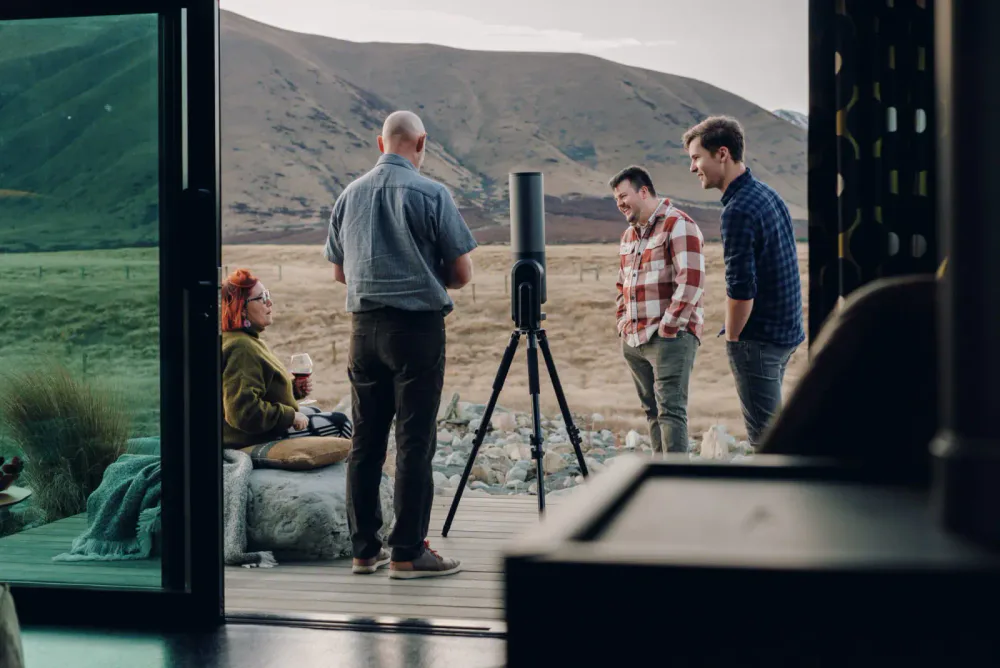
The more useful photograph may happen a few seconds later. Somebody returns to the task. Two people make a decision without looking at the camera. A guest notices something outside the frame. The room settles back into its actual rhythm.
That image was not unplanned in the sense of being lucky. The photographer had to be in the right business, with access, context and time. It simply was not staged.
This is where documentary-rooted commercial photography becomes useful. It is not a refusal to prepare. It is the discipline of knowing what matters, then leaving enough room for real work to reveal it.
A shot list can only name what is already known
A commercial shoot needs certainty. The homepage still needs a horizontal frame. The proposal still needs a portrait of the project lead. The new service still needs to be visible. People, products, locations and deadlines have to be organised before the camera arrives.
A good commercial photography brief protects those requirements. It explains who needs to understand what and where the finished images must work. A shot plan then turns that job into people, places, activities and variations.
But a shot list can only describe what the business and photographer already know to ask for.
It cannot reliably name the glance between two experienced workers when a fit is not quite right. It cannot specify the way a host checks a room once everybody else has left it. It cannot predict which worn object will explain years of practice better than the new equipment beside it.
Those details are not decorative “behind the scenes”. They may be the clearest evidence of how the business actually works.
The plan should secure the photographs the project cannot do without. It should not make everything outside the plan invisible.
The opposite of staged is not candid. It is observed
Commercial photography has developed a familiar shorthand for naturalness. People walk towards the camera without apparently noticing it. Colleagues laugh over coffee. A hand points at a laptop. A chef carries a plate through an empty dining room as if service happens without customers.
These images are not automatically bad or dishonest. They are efficient. Sometimes a layout needs a simple human action, and sometimes the real version of that action cannot happen within the available time, access or light.
The problem is not that the scene was directed. The problem is that the same gestures can describe almost any business in the category. They communicate “friendly team”, “careful service” or “people collaborating”, but reveal little about these people, this place or this way of working.
A candid-looking photograph can be completely manufactured. A formal portrait can be entirely truthful.
That distinction matters because “authentic” has become a visual style of its own: available light, a little motion, imperfect posture and subjects instructed not to look instructed. Documentary work is not defined by those surface cues. It is defined by attention to what was already there.
Observation is active work
Observation sounds passive only if the photographer has not done the preparation.
To recognise a useful moment, the photographer has to understand the roles in the room, which stages of the process matter, what can safely be photographed and what the audience is trying to judge. They need to know where an interaction is likely to happen, then choose a position that explains it without getting in the way.
Light still matters. So do timing, distance, composition and the relationship between one frame and the next. The photographer is not waiting for anything interesting to occur. They are anticipating a specific kind of information and responding when it becomes visible.
This is why simply asking staff to “act natural” rarely solves the problem. Natural behaviour returns when people have a real task, enough time to stop performing and confidence that the photographer understands the boundaries of the workplace.
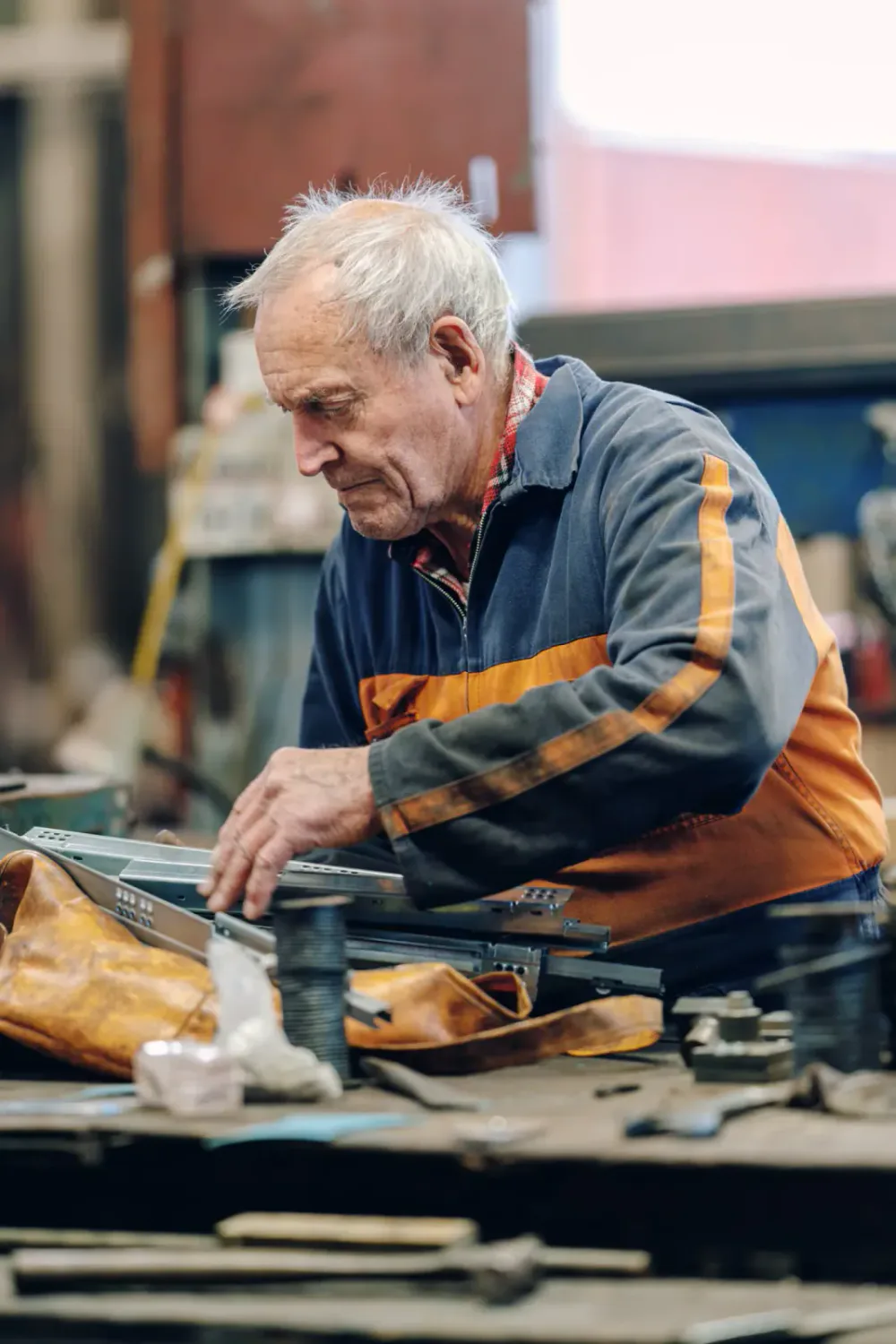
The useful photograph may be quiet. No sparks, raised glasses or large gesture may be involved. A person concentrating, preparing, checking or listening can carry more specific information than a dramatic action with no context.
Observation is therefore not the absence of a photographic point of view. It is a deliberate choice to look for meaning before manufacturing it.
Direction can clarify without inventing
Some photographs should be controlled.
A portrait becomes more readable when the subject steps into better light. A room may need furniture returned to its normal position. Food and products need deliberate arrangement. A safe, familiar action may be paused or repeated so the important detail is not lost. A person may need to look towards the camera because the page has to identify them clearly.
None of that makes the resulting image false.
The useful test is not whether the photographer intervened. It is what the intervention asks the photograph to claim.
Moving a fabricator half a metre towards the workshop door changes the light. Asking an office team to pretend to inspect a site they have never visited changes the meaning. Repeating a normal pour changes the timing. Inventing a customer interaction changes the evidence.
New Zealand’s Commerce Commission notes that the overall impression created by pictures and promotional material matters, including what is implied or left out. A photograph participates in the claim an advertisement makes even when the copy never states that claim directly.
That does not require every commercial image to be a literal record. It does require clarity about what is being presented as real.
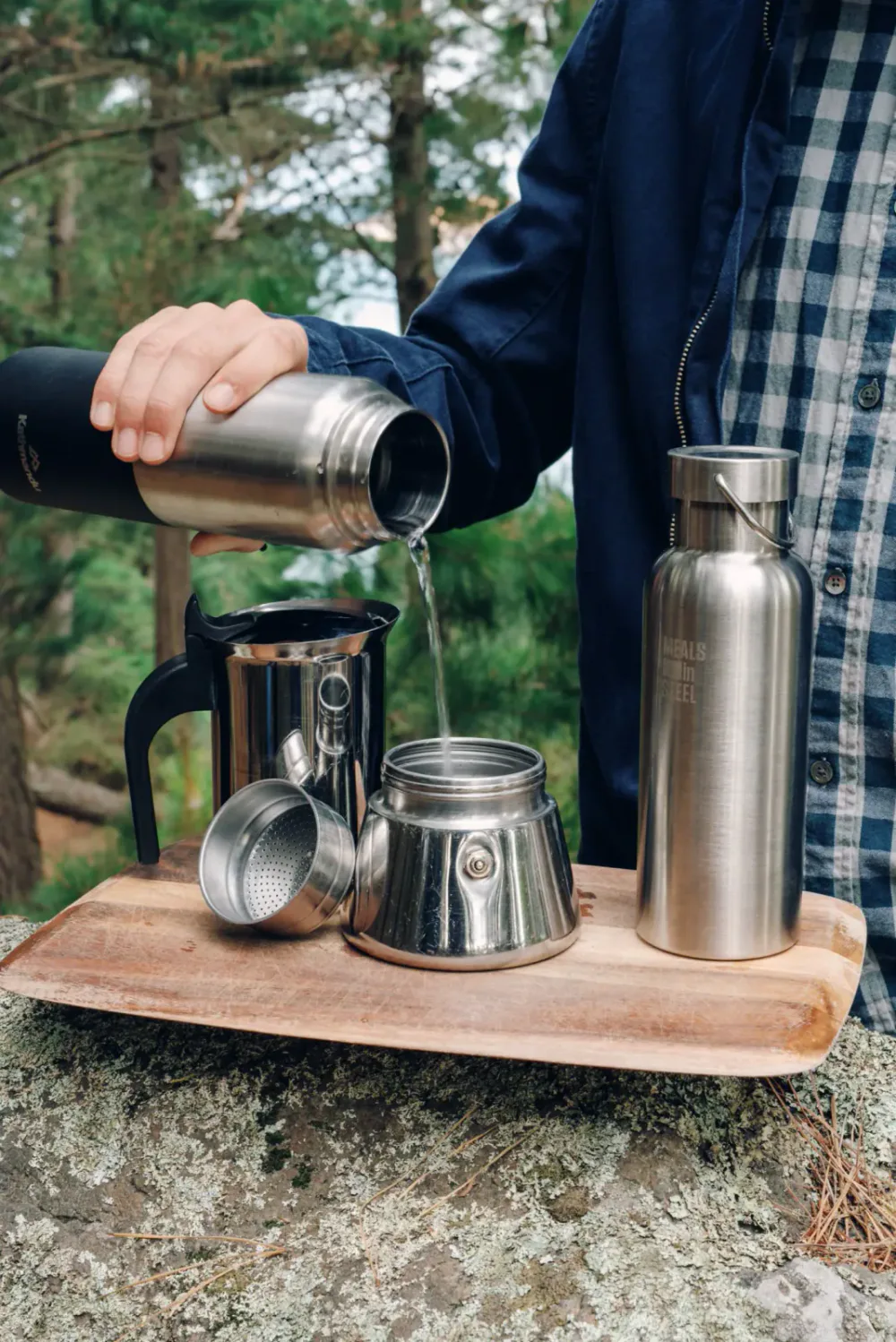
Direction works best when it removes confusion rather than adds theatre. It gives the real subject enough structure to be understood.
The camera is never absent
The pure fly-on-the-wall photograph is an attractive idea. It is also an incomplete description of what happens when a camera enters a workplace.
People notice. They make room, become self-conscious, tidy something, repeat themselves or briefly act like a version of the person they think the photograph requires. The photographer affects the scene by arriving, by choosing where to stand and by deciding which fraction of a second survives.
Even strict documentary practice recognises that influence. The World Press Photo Code of Ethics asks photographers to acknowledge the effect of their presence and prohibits staging or reenactment that misleads. That is a journalistic standard, not a commercial-shoot rulebook, but the underlying honesty is useful.
Commercial work has a client, a brief, an audience and a purpose. It is selected, edited and published to communicate something. Calling it documentary-rooted is more precise than pretending the photographer is neutral.
The method borrows documentary habits: observe before directing, keep the environment around the subject, follow a sequence rather than hunt only for heroes, and allow events to retain some of their own timing. It does not borrow a claim of objectivity.
Unstaged does not mean unbriefed—or unconsented
People do not need to be surprised by a camera for their behaviour to be real.
Staff can know why photography is happening, where the images may appear and who is responsible for the finished material. They can agree to take part, then return to work they genuinely know. In fact, clear expectations often reduce the awkwardness that makes a scene feel performed.
The Office of the Privacy Commissioner advises businesses to seek consent when somebody is photographed in their workplace or portrayed as a customer for advertising. An observational style does not remove that responsibility.
The same principle applies to safety, confidentiality and access. A moment is not more valuable because it was difficult to obtain. If a position is unsafe, a process is sensitive or a person does not want to be identifiable, the photograph has to change.
Documentary-rooted does not mean uncontrolled. It means the controls protect the truth of the work instead of replacing it.
A useful library needs certainty and surprise
One observed frame rarely carries an entire commercial project.
A business still needs deliberate anchors: photographs that identify its people, products, services and places, made in the proportions and clarity required by known layouts. Around them, observed frames show transitions, relationships, traces of use and decisions as they happen. They let a project page become a sequence rather than a grid of unrelated highlights.
This balance is what makes observation commercially useful. The planned images answer the brief directly. The unplanned ones often answer questions nobody thought to write down. The result should not feel like formal pictures followed by a separate set of “candids”. It should feel like one account with changes of pace.
The Field Note on website photography for Christchurch and Canterbury businesses makes the case for giving every image a practical job. A documentary approach expands the kinds of evidence available once the obvious placements are covered.
The more closely those frames belong to the actual business, the less they depend on whatever “authentic” happens to look like this year. Observation is not a gritty treatment: a quiet, beautifully lit photograph can be grounded in something true, while a messy frame can be empty if the mess says nothing.
No photograph can make a weak claim true or manufacture a culture that is not present. It can notice the standards, relationships and character that already exist but are hard to see from the outside.
Leave room for the photograph you could not name
The brief still matters. The shot list still matters. Their job is to protect what must be made while leaving enough room for the photograph that could not have been specified in advance.
That requires a particular balance from the photographer: enough preparation to understand the work, enough direction to make it legible and enough restraint to stop directing when the real thing is better.
Kerosene’s selected work moves between hospitality, accommodation, trades and products, but the method remains consistent. The process begins with what the images need to do, then makes space for the people and place to remain recognisable.
If a conventional brand shoot would require your team to spend the day performing a version of the business, tell me what the real day looks like.