Perspective
Why Christchurch restaurants shouldn’t look like they could be anywhere
A restaurant is not just its menu. The strongest hospitality photographs preserve the details that tell a customer where they are and what being there will feel like.
A restaurant can be photographed perfectly and still be made less believable.
The food is immaculate. The room is cleared. Every chair is straight. The light could belong to a studio in Auckland, Melbourne or Copenhagen. Nothing is technically wrong, but almost everything that locates the business has been removed.
That is not a small loss. Before booking, customers are trying to answer practical questions. What kind of room is this? Will it feel formal, loud, intimate or relaxed? Is it somewhere for a quick lunch, a family table or a long evening? Who will look after us? What is distinctive about going there rather than ordering something similar at home?
Food photographs answer only part of that enquiry. A useful restaurant image library also gives evidence of place: the people, room, neighbourhood, service, weather, light and small decisions that make the experience specific.
For Christchurch restaurants, that specificity matters. The city does not need to imitate somewhere else to look credible, and individual venues do not need to imitate one another.
Generic restaurant photography is not neutral
Generic imagery is often described as safe. It is more accurate to say that it withholds information.
A close photograph of a finished dish can tell a customer about ingredients, portion and presentation. It cannot show the distance between tables, the pace of service, the character of the room, whether the restaurant opens onto a busy street or a sheltered courtyard, or how guests occupy the space.
If an entire library is made from isolated plates, cocktails against anonymous walls and an empty interior photographed at its most pristine, the customer is left to invent the rest. The images may be attractive, but they provide weak evidence.
This is especially common when visual references are gathered from international restaurants with very different buildings, daylight, service models and customers. The reference becomes a template. The local business is then rearranged to resemble the template, and the photography documents the rearrangement rather than the business.
The alternative is not to reject polish. It is to make polish answerable to truth.
Christchurch does not have one hospitality look
There is no single photograph that represents dining in Christchurch.
ChristchurchNZ’s current guide to the city’s dining precincts moves through The Terrace, Victoria Street, Riverside and the West End, New Regent Street, High Street and the SALT District. Those areas differ in architecture, street life, scale and the way people arrive. Beyond the central city are suburban restaurants, neighbourhood cafés, coastal businesses, destination venues and the wider Canterbury food-and-wine region.
The city’s hospitality scene is also broad enough that 16 local restaurants received recognition in the 2026 MICHELIN Guide, including one-star awards for Inati and Tussock Hill, according to ChristchurchNZ’s announcement on 30 June 2026. That is dated context, not a reason for every restaurant to adopt the visual language of fine dining. It is evidence that “Christchurch restaurant” no longer describes one level of formality, one cuisine or one kind of room—if it ever did.
The city’s own story describes Ōtautahi Christchurch as a city in pursuit of balance. A useful commercial photograph does not need to illustrate that campaign. But the idea is a helpful warning against flattening a complicated place into one fashionable surface.
A restaurant’s photographs should begin with what is true of that restaurant.
A sense of place is not a landmark
Local photography does not require the Port Hills in every window, a tram passing every entrance or a forced reference to the rebuild. Those can become another form of generic imagery.
Sense of place usually comes from an accumulation of ordinary, accurate details:
- the way the entrance meets the footpath;
- neighbouring buildings, planting, signage and street light;
- materials and objects that belong to the room;
- the actual distance between kitchen, bar, table and guest;
- winter coats on chairs or low evening light through a window;
- summer service spilling into a courtyard;
- local staff working in their own manner rather than performing hospitality for the camera;
- food shown in the context in which it will be served and shared.
None of those details needs to shout “Christchurch”. Together, they prevent the business from looking fictional.
Show the evidence a customer cannot get from the menu
The menu already lists dishes and prices. Photography earns its place when it adds information that words or an ordering system cannot communicate as quickly.
Arrival
An exterior is not only a record for Google Business Profile. It helps a first-time customer recognise the building and understand the immediate setting. The most useful version may include the footpath, doorway, neighbouring frontage or the transition from outside to in—not merely a tight photograph of the sign.
The room as it is used
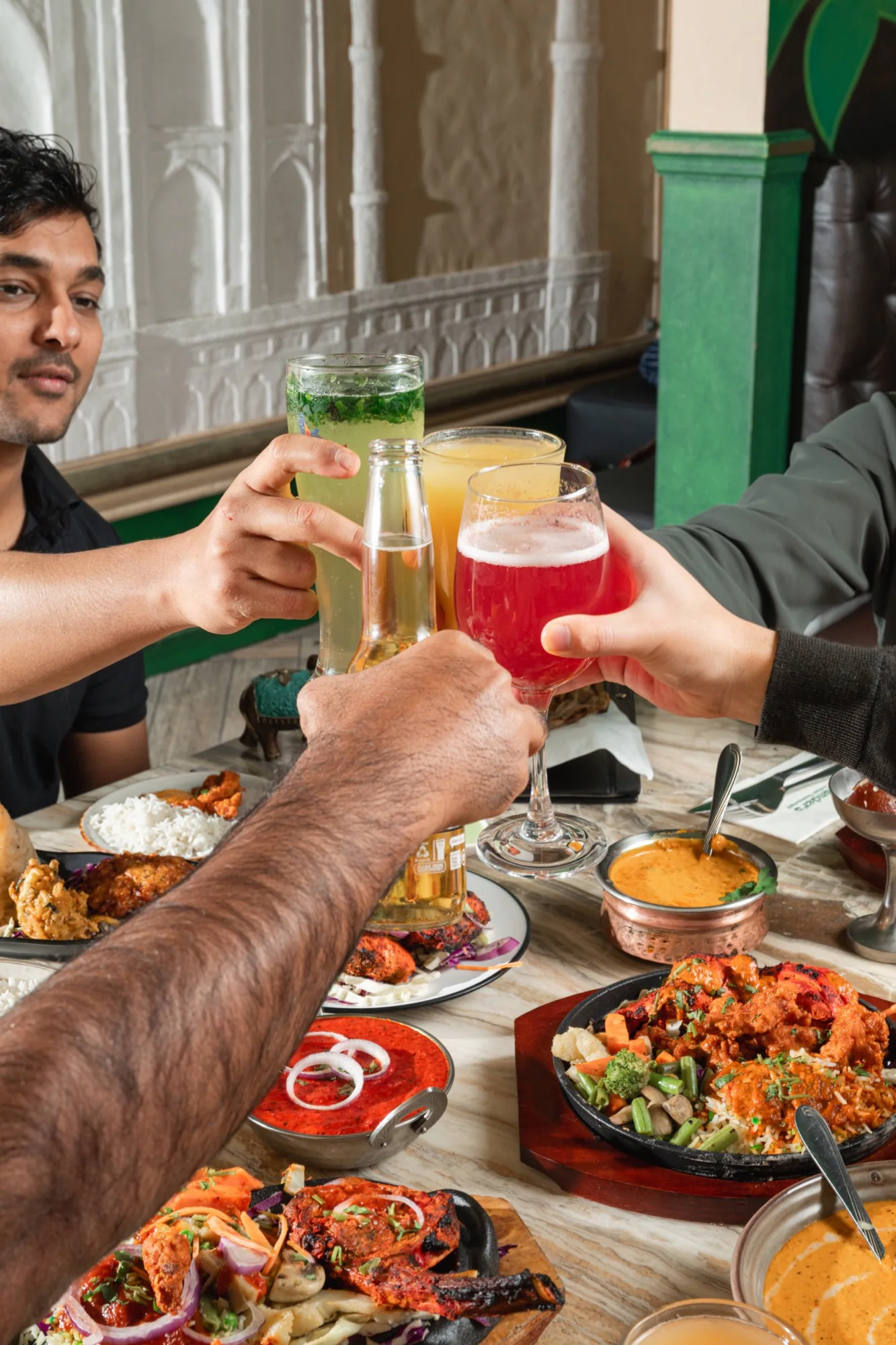
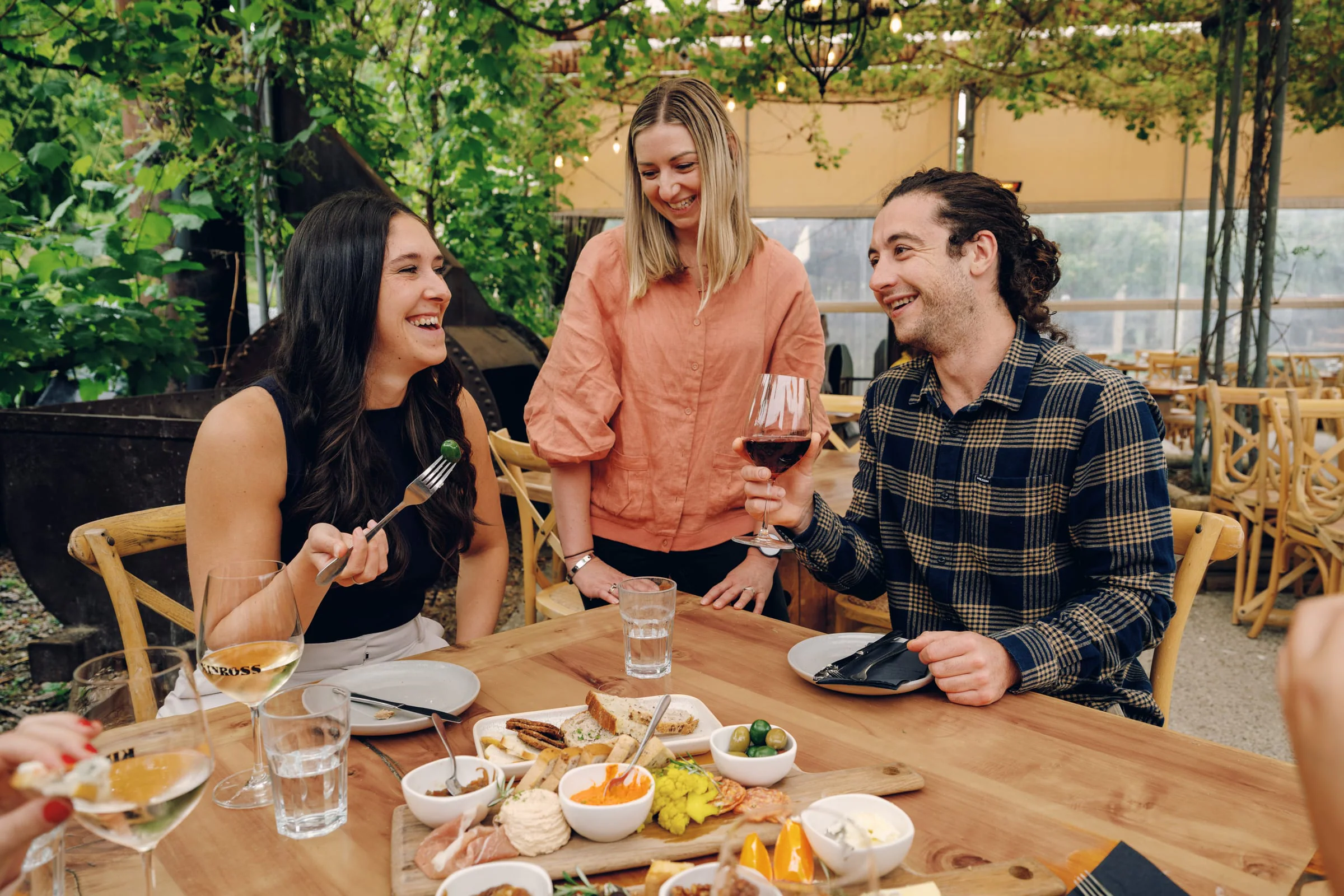
An empty room shows design. An occupied room shows scale, atmosphere and behaviour. Restaurants often need both.
The useful occupied frame is not necessarily the busiest possible scene. It may show a quiet table by a window, a family sharing dishes, someone having a drink at the bar or a staff member moving between tables. The point is to show how the space works when people are present.
The people doing the work
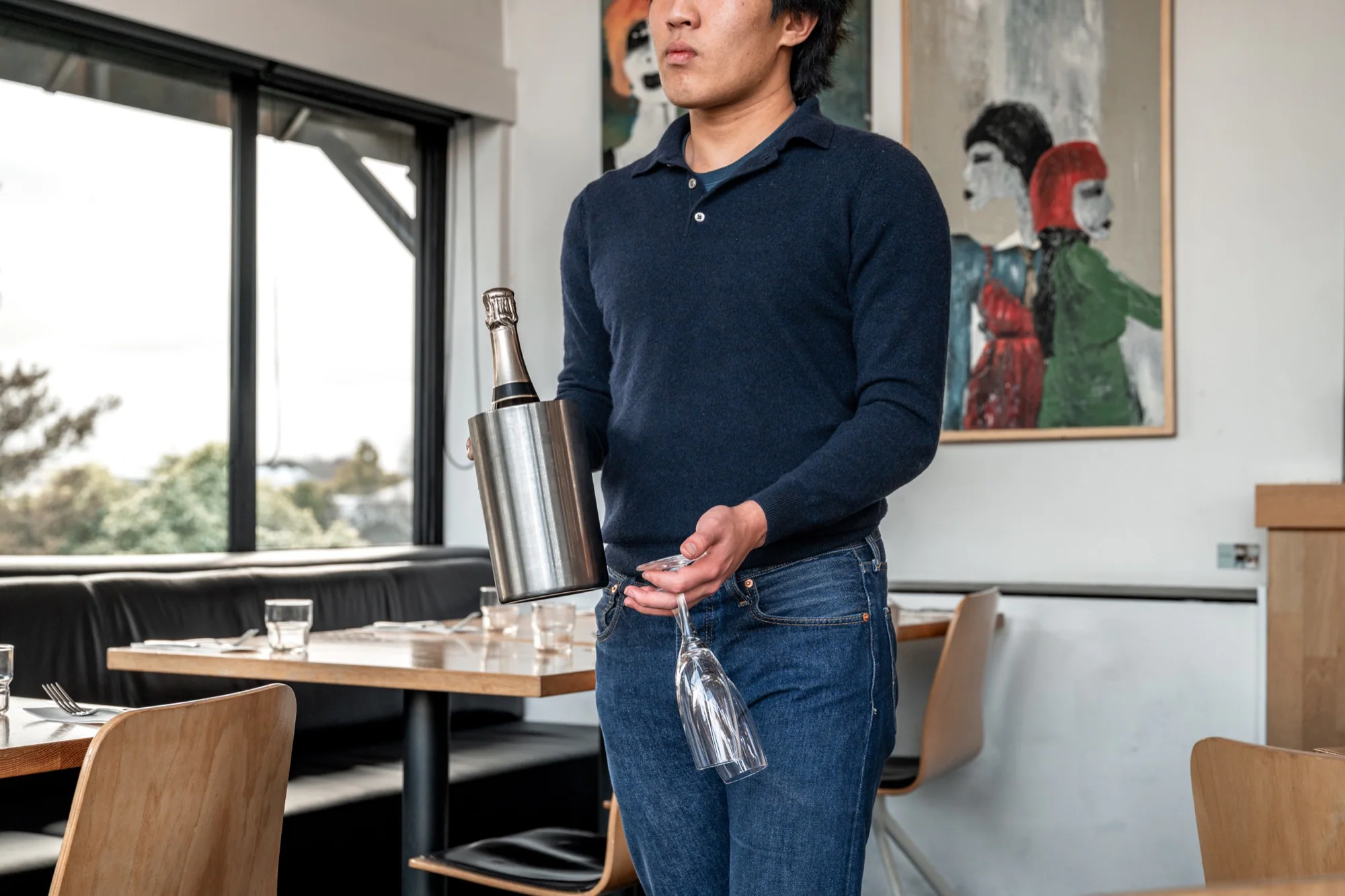
Hospitality is delivered by people, yet many restaurant libraries make staff almost invisible. A chef portrait has value, but it should not be the only evidence of work. Preparation, checking, carrying, explaining, pouring, clearing and noticing are all part of the experience a customer is buying.
These photographs are stronger when the action has a real purpose. Give the staff member something they genuinely do and enough time to do it. Direction can improve position and light without turning the person into a prop.
Food in context
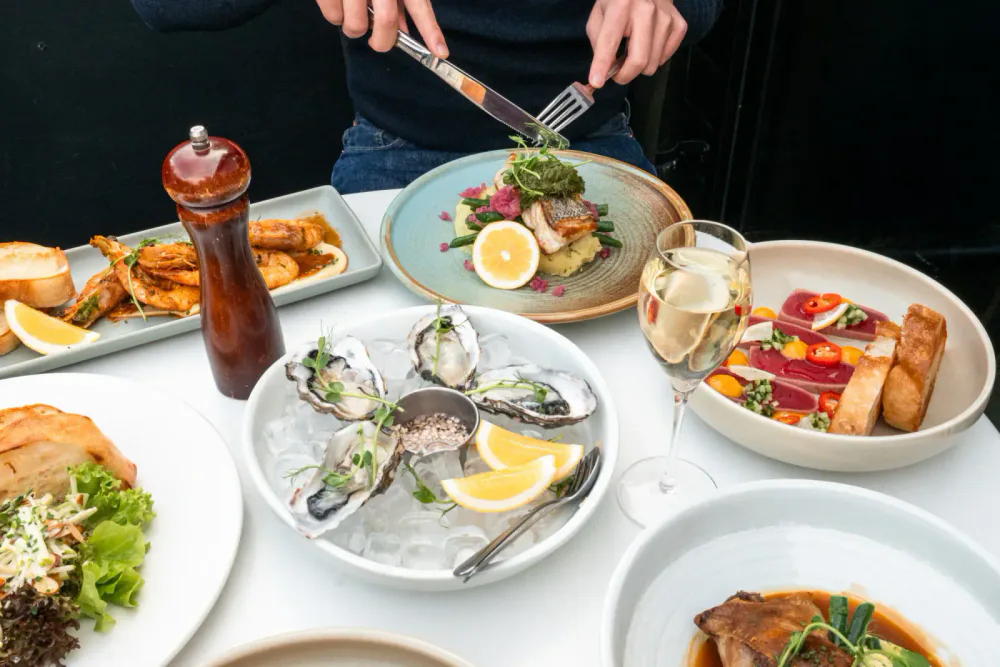
A dish deserves a clear photograph when it needs to be identified or sold on a menu. It also deserves to be seen arriving, being divided, paired with a drink or sitting among the rest of a meal.
Context changes the meaning. One plate says “this is available”. A table in use says “this is what coming here can feel like”.
Time, season and weather
Christchurch light changes the business. A winter dinner, a bright summer lunch, an east-facing breakfast room and an evening exterior are not interchangeable.
That does not mean a restaurant needs four seasonal campaigns every year. It means shoot timing should be chosen deliberately. If the important experience begins after dark, photographing only at midday leaves a gap. If the courtyard is central to the business, making it look permanently climate-controlled would be misleading.
Documentary does not mean uncontrolled
Documentary-rooted commercial photography is sometimes misunderstood as arriving without a plan and hoping something useful happens. That is not the method.
The planning happens around reality:
- identify what customers need to understand;
- decide which parts require controlled light or careful styling;
- schedule the room, food and service at workable times;
- brief staff and guests clearly;
- leave enough space for actual interactions to develop;
- make variations for the website, Google, press and campaigns while the scene is available.
There may be a lighting stand beside the table. A plate may need to move five centimetres. A staff member may repeat a walk because the first frame was blocked. The distinction is not between directed and undirected photography. It is between direction that clarifies the business and direction that replaces it with theatre.
Clean food photography still has a job
An argument for place should not become an argument against clean photographs.
Delivery menus, online ordering, menu launches, press requests and some website sections need direct, controlled images of individual dishes. Consistency can be useful. Distraction can be costly. A customer deciding between menu items may need accuracy more than atmosphere.
The mistake is asking that work to carry the entire restaurant story.
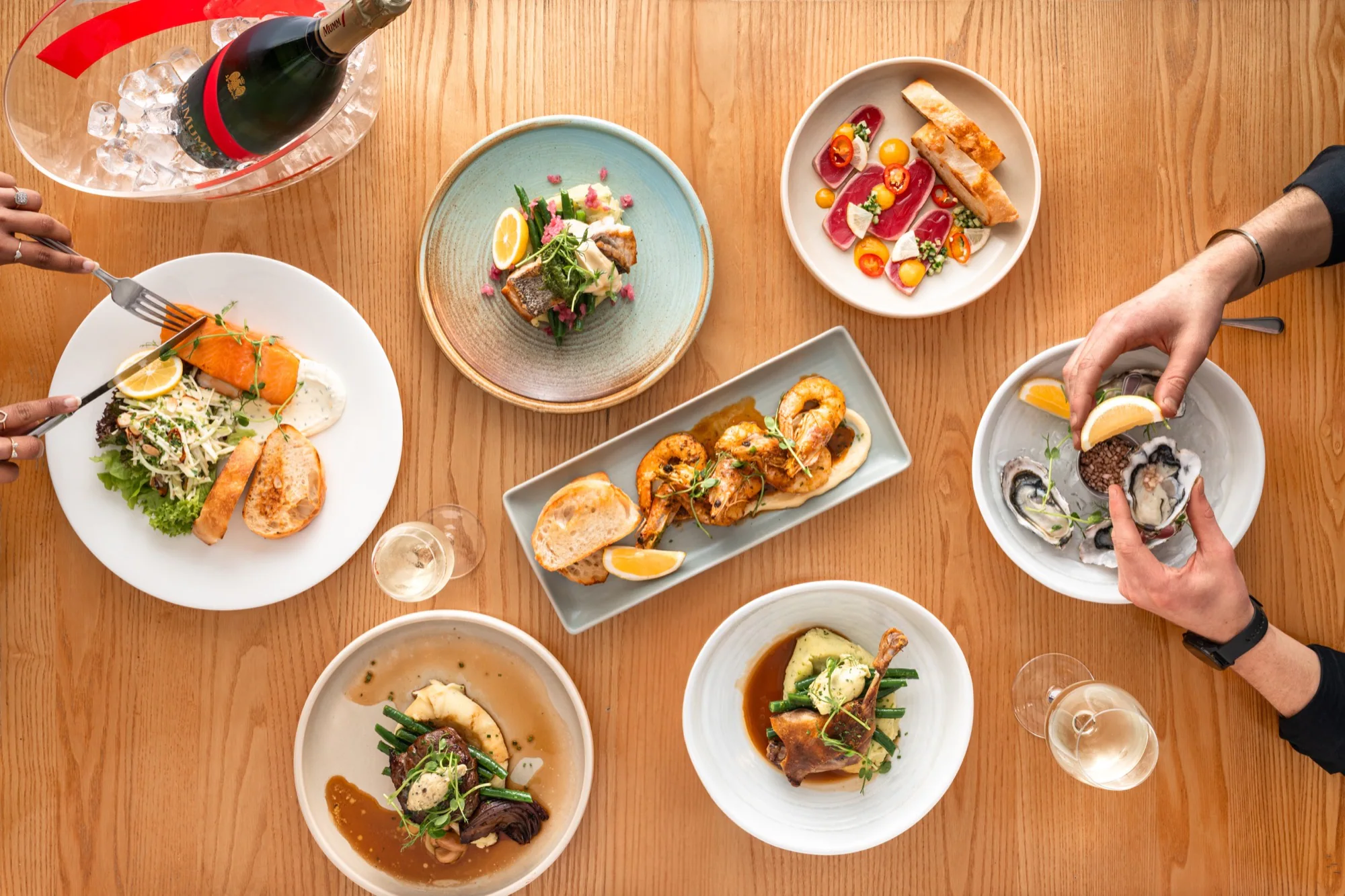
A strong library can include a disciplined series of menu items and a looser set of people, service and place. They solve different problems. The visual treatment can still feel coherent through colour, light, pacing and selection.
The practical restaurant photography shot list explains how to plan those uses across a website, Google profile, delivery platforms, press and social media.
Build the library in four layers
When a Christchurch restaurant commissions photography, I find it useful to test the brief against four kinds of evidence.
1. Identification
Can a customer recognise the exterior, entrance, dining areas, important dishes and key people? These are the factual photographs.
2. Experience
Can they understand how the venue feels when it is operating? These frames need guests, service, movement, proximity and the correct time of day.
3. Proof
Can they see the work behind the promise? Preparation, skill, care, ingredients, specialist equipment and staff attention make claims more credible.
4. Flexibility
Can the library work beyond one campaign? This means horizontal and vertical compositions, useful negative space, sequences rather than isolated favourites, and enough visual range to avoid repeating the same hero photograph everywhere.
If one layer is missing, the library will usually feel thin. Identification without experience looks clinical. Experience without identification can become vague lifestyle advertising. Proof without context may interest industry peers but confuse customers. Flexibility without a clear story produces volume rather than usefulness.
What to ask a Christchurch restaurant photographer
Do not judge a photographer only by whether the food looks appetising. Look across complete projects and ask:
- Do the restaurants remain recognisably different from one another?
- Are people present as participants, not decoration?
- Can the photographer handle food, interiors, portraits and live service as one coherent assignment?
- Do the images show how a venue works as well as how it has been designed?
- Is there evidence of arrivals, transitions, details and the surrounding environment?
- Can controlled menu imagery and documentary coverage be planned within the same production?
- Will the final delivery include the orientations and range needed across real channels?
- Are usage, permissions, timing and disruption discussed before shoot day?
The answer does not need to be a documentary treatment for every frame. It should show that the photographer can tell the difference between a photograph that is merely attractive and one that is useful to this particular business.
The aim is accurate expectation, not local decoration
A sense of place is commercially useful because it helps the right customer form a more accurate expectation.
That customer may be attracted by the room, the energy, the intimacy, the food, the staff or the fact that the restaurant feels unlike somewhere they already know. Another customer may decide it is not for them. Clear positioning does that. Photography should not promise universal appeal by sanding away every specific edge.
Christchurch restaurants do not need more images that could have been made anywhere. They need photographs with enough precision to show why somebody should go there.
Kerosene provides restaurant and hospitality photography in Christchurch and across the South Island, planned around the food, people, service and place as one working image library. The commercial photography process explains how the brief, shoot and delivery are structured. If you have a venue and a real communication problem to solve, send the details.